

The Work Opportunity Tax Credit (WOTC) is a federal credit for employers who hire people from certified targeted groups. It is not available right now for new hires. The IRS says the credit applies to wages for people who begin work on or before December 31, 2025, and it has not been reauthorized for later start dates. The rules below still matter. If Congress renews the credit, employers who kept their screening process running will be in the best position to use it.
TL;DR
- WOTC authorization ended for employees who begin work after December 31, 2025. Check the IRS page for the current status before you plan around it.
- When active, the credit is generally 40% of up to $6,000 of first-year wages (up to $2,400) for employees who work at least 400 hours. A 25% rate applies at 120 to 399 hours.
- The employee must be certified by your state workforce agency as a member of a targeted group. Screening paperwork is due within 28 calendar days of the start date.
- Form 8850 must be completed on or before the day you make the job offer.
- Keep screening new hires while the credit is lapsed. Ask your CPA how to handle the paperwork and the tax return if the credit returns.
Table of Contents
- Is the work opportunity tax credit still available?
- What the credit is and who administers it
- Who qualifies: the targeted groups
- How much the credit is worth
- The WOTC screening process, step by step
- What to do while the credit is lapsed
- Perspective: why credits like this need a year-round plan
- How Elevate can help
- FAQ
- Sources
Is the work opportunity tax credit still available?
Not for new hires today. The IRS states that WOTC applies to wages paid to certain individuals who begin work on or before December 31, 2025, and that it does not apply to employees who begin work after that date. That IRS notice also says Form 8850 is no longer in use for those later hires.
What that means in practice:
- Employees hired on or before December 31, 2025: The credit can still apply, as long as they were properly certified. Talk to your CPA about claiming it on your return.
- Employees hired after December 31, 2025: No credit is available unless Congress reauthorizes the program.
- State agencies: Workforce agencies have said that applications for hires after the lapse are held in a queue pending federal renewal. New York’s labor department explains that states may review and prepare certification requests during a lapse but may not issue certifications.
The credit has a history of running on temporary authorizations, so status can change. The IRS WOTC page is the place to confirm where things stand on the day you read this.
What the credit is and who administers it
WOTC is a general business credit under Internal Revenue Code section 51, jointly administered by the IRS and the Department of Labor. The idea is simple: you hire someone who faces a barrier to employment, a state agency confirms that the person belongs to a targeted group, and you reduce your federal income tax by part of the wages you pay in that person’s first year.
A few points that surprise first-time employers:
- Employers of all sizes can use it. The IRS says this includes taxable employers and certain tax-exempt employers.
- It is a credit, not a deduction. It reduces tax dollar for dollar, which is why it can be worth more than the wage deduction alone.
- Certification is the gate. You cannot claim it just because an employee looks like they fit a category. A designated local agency, usually your state workforce agency, must certify the individual as a member of one of 10 targeted groups.
Who qualifies: the targeted groups
The IRS describes 10 targeted groups. The exact definitions, such as age ranges, benefit-receipt periods and time out of work, are detailed. Rather than guessing from a summary, use the instructions on the IRS and Department of Labor pages. Broadly, the groups cover people who have faced obstacles to steady employment, for example people receiving certain public benefits, some veterans, people with certain felony convictions, and people who were long-term unemployed.
The Department of Labor’s guidance also points out that American Job Centers and partner agencies help identify possible targeted-group job seekers, but certification still goes through the state workforce agency.
Two practical notes for small employers:
- Applicants often do not know they qualify. The group definitions depend on things like benefit history, so a short questionnaire given to every applicant is how eligibility gets found.
- The credit applies to first-time hires. The DOL describes the screening as verifying a first-time qualifying member of a targeted group. A rehired former employee does not generally fit.
How much the credit is worth
The amount depends on how many hours the employee works in the first year and on the targeted group.
The IRS says the credit is generally 40% of up to $6,000 of qualified first-year wages, a maximum of $2,400, for an employee who works at least 400 hours. A 25% rate applies for employees who work at least 120 but fewer than 400 hours. The Department of Labor says the credit generally ranges from $2,400 up to $9,600, depending on the targeted group and the qualified wages paid.
| Hours worked in first year | Credit rate | Standard wage cap | Maximum credit |
|---|---|---|---|
| 400 hours or more | 40% | $6,000 | $2,400 |
| 120 to 399 hours | 25% | $6,000 | $1,500 |
| Under 120 hours | No credit | n/a | $0 |
The $1,500 figure is simple arithmetic on the IRS rate (25% of $6,000). Higher maximums, up to the $9,600 ceiling, apply to certain groups with larger qualifying wage caps.
A worked example
Say you run a small contracting company and hire a certified worker in a targeted group. Over the first year, you pay $14,000 in wages, and the worker puts in 900 hours.
- Qualified wages are capped at $6,000.
- At 40%, the credit is $2,400.
- The hours threshold of 400 is met, so the higher rate applies.
Now take a seasonal worker who logs 300 hours and earns $5,000. The 25% rate applies to $5,000, which gives a credit of $1,250. The 400-hour line is where many seasonal and part-time employers lose the larger credit, so scheduling and retention matter.
The WOTC screening process, step by step
SCREENING is where most employers fail. The credit is lost not because the employee was ineligible, but because the paperwork was late or incomplete. Here is the sequence the IRS and Department of Labor describe.
- Give every applicant the screening form. On or before the day you make a job offer, the applicant and you must complete Form 8850. The applicant fills in Part I, and you complete your part by the same date.
- Submit to your state workforce agency. Send Form 8850 together with ETA Form 9061 or ETA Form 9062 to the state workforce agency in the state where the employee works, within 28 calendar days after the start date.
- Wait for certification. The state reviews the request and issues a certification or a denial. Many states take submissions through an online portal, which gives you a timestamp.
- Claim the credit on your return. After certification, taxable employers file Form 5884, and tax-exempt employers file Form 5884-C, as the IRS describes.
- Keep the records. Keep the certification, the forms, and payroll records showing wages and hours for each certified employee, in case of questions later.
The 28-day rule
The 28 days are counted in calendar days from the employee’s first day of work, not the offer date. Weekends and holidays count. If your office is small and the person who handles hiring is also the person who runs the shop, put the deadline in your payroll calendar the day someone starts.
Is pre-certification required?
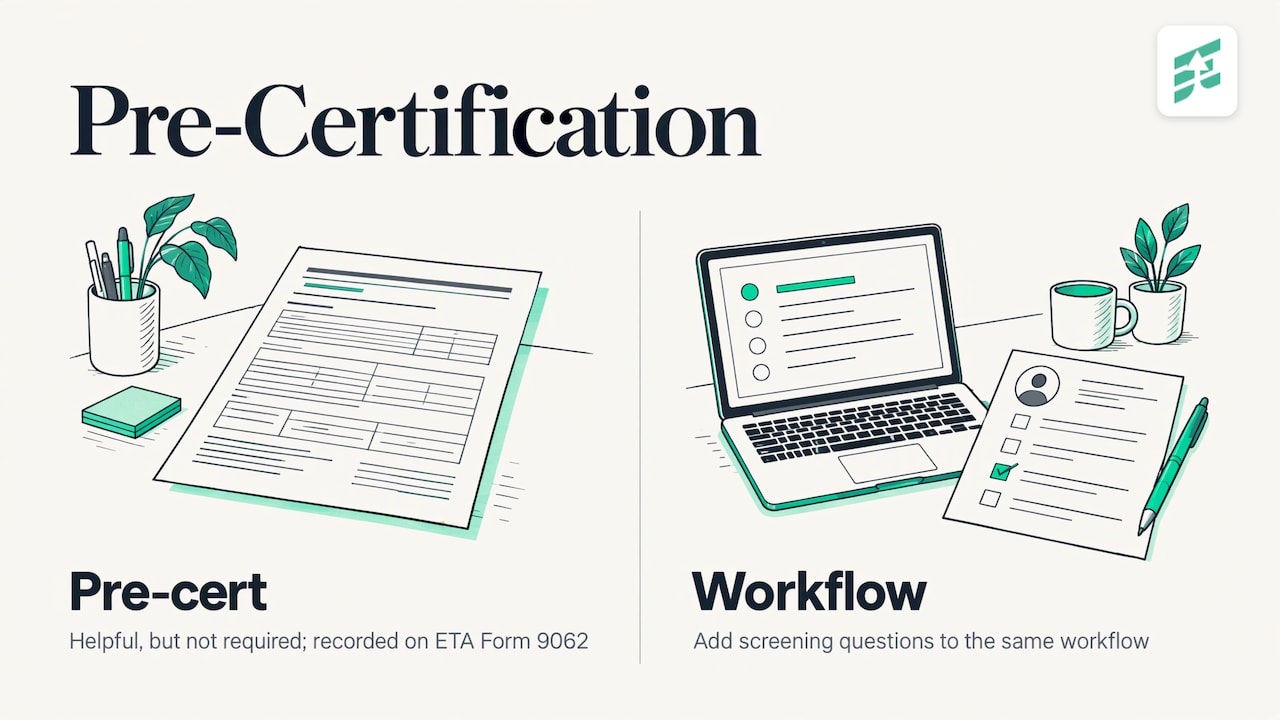
No. The Department of Labor explains that pre-certification through a state agency or participating agency, recorded on ETA Form 9062, is helpful but not required for hiring or claiming the credit. If you use an applicant tracking tool or recruitment chatbots for small businesses, build the screening questionnaire into the same workflow so it is never skipped.
Should applicants fill out the form?
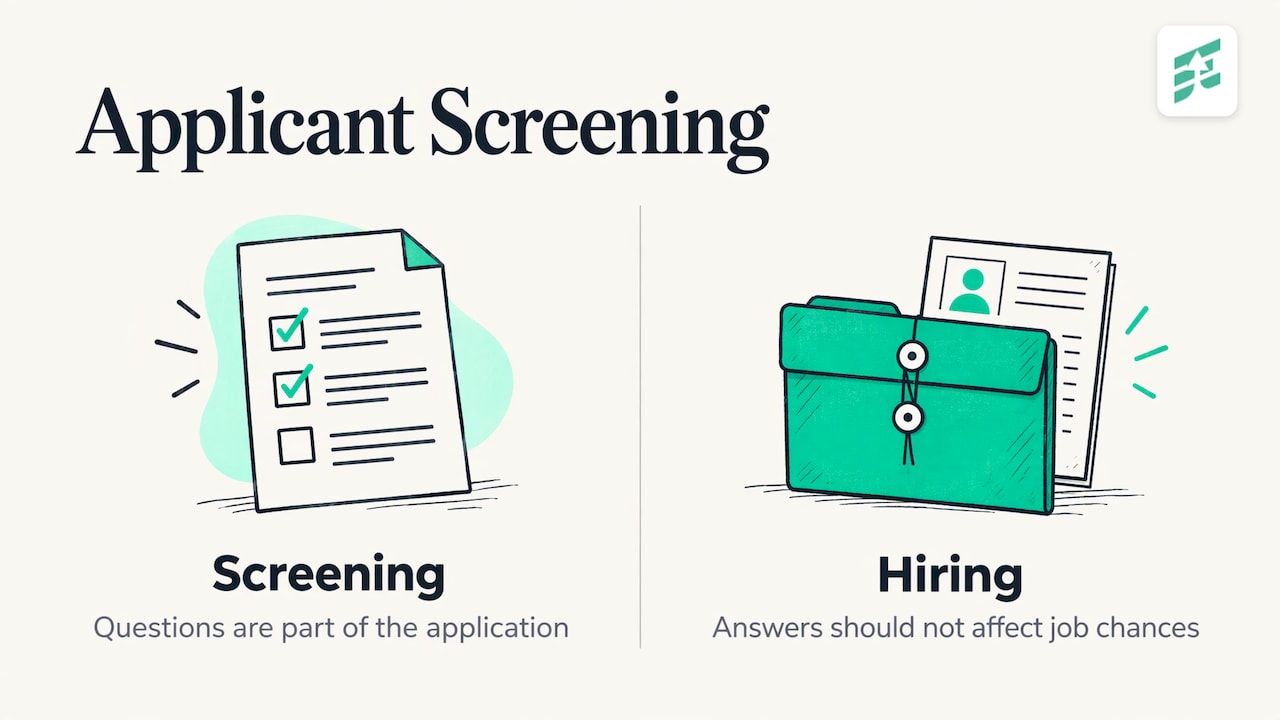
Applicants are asked to complete the screening questions as part of the application, and the answers are used only to determine whether the employer can request certification. A question you will see from applicants: does answering affect my chance of getting the job? It should not, and employers should treat the screening as separate from the hiring decision.
What to do while the credit is lapsed
The lapse leaves employers with a decision. Here is a practical approach.
- Check your 2025 hires. If you hired anyone on or before December 31, 2025 and screened them, confirm that certifications arrived and that your accountant has them. Uncertified hires cannot be claimed after the fact if the 28-day window passed.
- Keep screening. State agencies have said they are holding applications, and the Department of Labor guidance says states may continue to review and prepare requests. If the credit is renewed, you will have a file ready rather than a scramble.
- Do not book the credit in your cash flow. Until the law changes, treat WOTC as zero for 2026 starts in budgets and estimated tax payments. See our guide to quarterly estimated tax payments for how to set those numbers.
- Look at other levers. Payroll structure, owner pay and entity choices can change your tax bill in ways that do not depend on Congress. Our pieces on owner compensation and lowering self-employment taxes are a good start.
Perspective: why credits like this need a year-round plan
Most small business owners hear about a credit like WOTC when a customer, a payroll provider or a friend mentions it. By then, the deadline has often passed. A 28-day window does not fit into a once-a-year tax meeting.
That is why we work with clients year-round. Hiring decisions, payroll setup, bookkeeping and the tax return are one connected system. When your payroll process asks the right screening question on day one, and your books track wages and hours by employee, a credit is a matter of paperwork rather than a hunt through old records.
Our approach to small business tax is proactive and strategic: we look at what is true for your business now, what the law allows today, and what could come back. A lapsed credit is a good example. We would not count on it, but we would make sure your process is ready so you lose nothing if it returns.
Every business is different. A contractor with seasonal crews, a real estate investor with a few property managers, and a cannabis operator with high turnover each face different hours thresholds and different recordkeeping needs. The plan should fit the business.
Justin Ash, CPA
How Elevate can help
If you hire regularly, the credit is one small piece of a bigger picture: payroll that is accurate, books that show wages by employee, and a tax plan that is updated as the law changes. We are a CPA firm in Medford, Oregon, and we work with small businesses, startups, real estate investors and cannabis operators on tax planning and preparation, accounting and bookkeeping, and payroll.
If you want a second set of eyes on your hiring paperwork, your payroll setup or your 2025 return, see our payroll processing services or reach out through Elevate Business Consulting to book a conversation.
For a wider view of how we think about timing, see our quarter-by-quarter tax planning guide.
FAQ
Is the WOTC still in effect for 2026?
No, not for people hired after December 31, 2025. The IRS says the credit does not apply to employees who begin work after that date. If Congress renews it, the IRS and your state workforce agency will post the details, so check the IRS WOTC page for the latest.
What is the deadline for WOTC screening?
The Department of Labor says to submit Form 8850 with ETA Form 9061 or 9062 to your state workforce agency within 28 calendar days after the employee’s start date. Form 8850 itself must be completed on or before the day the job offer is made.
How much is the work opportunity tax credit per employee?
Generally 40% of up to $6,000 of first-year wages, or up to $2,400, for employees who work at least 400 hours. It is 25% for 120 to 399 hours. The Department of Labor says the credit can reach $9,600 depending on the targeted group.
Do tax-exempt organizations qualify?
Certain tax-exempt employers can claim the credit. The IRS says they file Form 5884-C after certification, while taxable employers file Form 5884. Rules for tax-exempt employers are narrower, so confirm your situation with a CPA.
Sources
- Work Opportunity Tax Credit, Internal Revenue Service
- Form 8850 is no longer in use, Internal Revenue Service
- Work Opportunity Tax Credit, Workforce Alabama
- WOTC Program, New York State Department of Labor
- WOTC Quick Reference Guide for Employers, U.S. Department of Labor
- How to File a WOTC Certification Request, U.S. Department of Labor